Japanese Fans Follow Xiang Xiang All the Way to China
On June 12, 2025, at the Bifengxia Base of the China Conservation and Research Center for the Giant Panda in Ya'an, Sichuan, a giant panda named Xiang Xiang was happily munching on fresh bamboo shoots.
Among the visitors, one man carrying three cameras stood out. His name is Takashi Takashi, a Japanese photographer who has spent eight years photographing giant pandas. This was his fifth trip to China, made especially to see Xiang Xiang.
It is a cross-border journey of “panda chasing.” From Tokyo’s Ueno Zoo to Bifengxia in Ya’an, Takashi and a group of Japanese Xiang Xiang fans have spent years following the pandas through their cameras. Their stories show how these adorable black-and-white animals have won hearts around the world and become global stars.
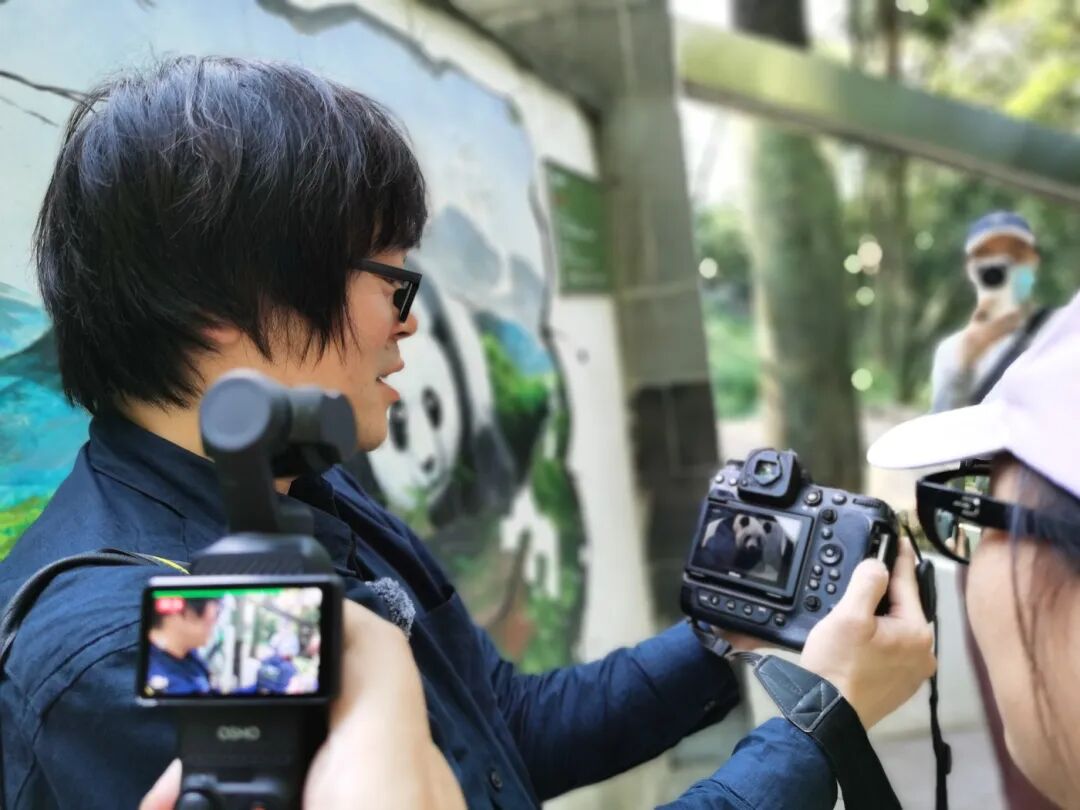
A Photographer Who Has Spent Years “Chasing Pandas”
Among the many Japanese visitors at Bifengxia that day, Takashi was easy to spot.
This was his fifth visit to the China Conservation and Research Center for the Giant Panda in Bifengxia, and, as always, Xiang Xiang was the reason for his trip.
Takashi is a web designer by profession. In September 2011, he started a blog called “Panda Daily,” where he shared photos of giant pandas he took at Ueno Zoo.
He has now spent 14 years photographing giant pandas and has published several panda photo books.
So why pandas?
Takashi says it was love at first sight.
In February 2011, the giant pandas Bili, known as Lili in Japan, and Xian Nü, known as Zhen Zhen in Japan, arrived in Japan, ending a nearly three-year period without giant pandas at Ueno Zoo.
One day in August that year, Takashi decided to go and see them. From then on, photographing giant pandas became a long-term passion.
“On a single day, I can take a lot of photos—around 5,000,” he says.
In 2017, Bili and Xian Nü became parents to Xiang Xiang.
After Xiang Xiang was born, Ueno Zoo regularly posted photos of the cub on its website every 10 to 20 days. When Xiang Xiang was six months old, the zoo held its first livestream featuring the young panda.
On December 19, 2017, Xiang Xiang made her first public appearance at the zoo.
From then on, she became a regular star in Takashi’s photographs.
During his latest visit, Takashi kept pressing the shutter as Xiang Xiang went about her day. After just one hour, he had taken more than 8,000 photos.
When he took out his memory card to transfer the photos to his computer, Japanese visitors passing by would stop and greet him.
His panda photography has made him something of a celebrity in Japan, and it has also helped him make many friends.
On June 17, Takashi returned to Japan with thousands of new images of Xiang Xiang.
That day, Ueno Zoo was closed.
But once the zoo opens again, Takashi’s story of photographing giant pandas will continue.
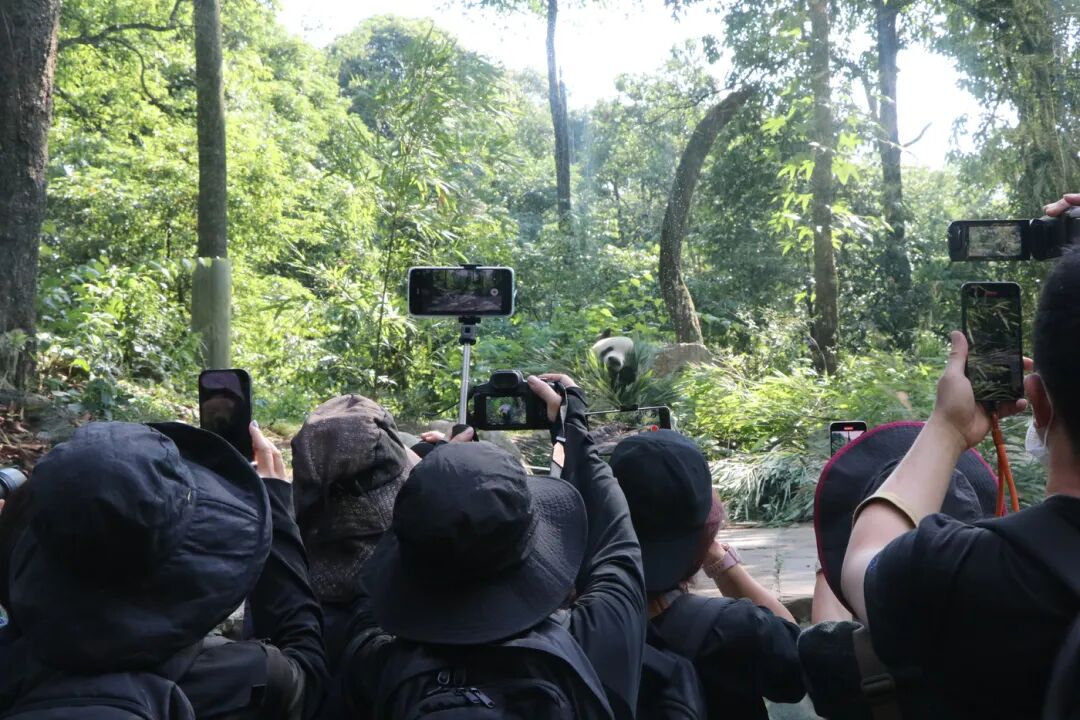
The “Panda Fever” That Keeps Growing
“This was bought at a store. There are many shops in Japan that sell kimonos like this.”
Among the Japanese visitors, a woman wearing a panda-patterned kimono caught people’s attention.
When asked if she had made the kimono herself, she smiled and explained that panda-themed products are everywhere in Japan.
Her outfit is just one example of how deeply Japan’s “panda fever” has entered everyday life.
The enthusiasm goes far beyond simply watching pandas. It has created a large and active market built around all things panda.
From creative panda merchandise found in everyday shops to more sophisticated works of art, Japan’s love for giant pandas can be seen in many different forms.
Takashi’s latest Xiang Xiang photo book, published in 2024, sold 10,000 copies in its first edition.
Meanwhile, the Ueno Consultation Center, located near Ueno Zoo and offering more than 200 types of giant panda souvenirs, has earned a nickname among Japanese panda fans: the “Giant Panda Consultation Center.”
In Japan, the love of giant pandas has even reached the world of art.
Yuko Akutsu is a Japanese woodcarver whose works are closely connected with giant pandas.
She believes wooden artworks have a special appeal because people tend to treasure and carefully preserve them.
“Japan already has so many panda-themed products in everyday life,” she says. “I hope we can also have more giant panda artworks in the world of art.”
The economic impact of Japan’s panda fever is also significant.
According to estimates by Japanese researchers, Xiang Xiang generated more than 60 billion yen (about 2.8 billion yuan) in economic benefits during the less than six years between her birth and return to China.
The twin pandas Xiao Xiao and Lei Lei, born at Ueno Zoo in 2021, are estimated to generate more than 30 billion yen (about 1.4 billion yuan) in economic benefits each year.
As Xiang Xiang returned to China, a new travel trend has emerged in Japan: following the pandas to Sichuan.
Chisae Shimada, an employee at the China National Tourist Office in Osaka, has noticed the trend.
“Most people in Japan really love giant pandas,” she says. “As pandas that once lived in Japan have returned to China, more and more Japanese people are traveling to Sichuan to follow them.”
Travel packages designed specifically for panda lovers are becoming increasingly popular.
Xiang Xiang’s return has also given a strong boost to Ya’an’s efforts to become an important destination for giant panda culture and tourism.
Ichiro Murakami, president of Japan Heiwa Travel, has seen the same trend.
Before 2019, his travel agency brought around 2,300 visitors to Sichuan each year. As more flights connecting Japan and Sichuan have become available and visa policies have become more convenient, the number of tourists traveling specifically to see giant pandas in Sichuan has continued to rise.
And giant pandas are not the only reason Japanese tourists come to Sichuan.
“Giant pandas are definitely the number one reason Japanese tourists visit Sichuan,” Murakami says. “But they are not the only attraction. Jiuzhaigou and the culture of the Three Kingdoms are also very appealing to Japanese visitors.”
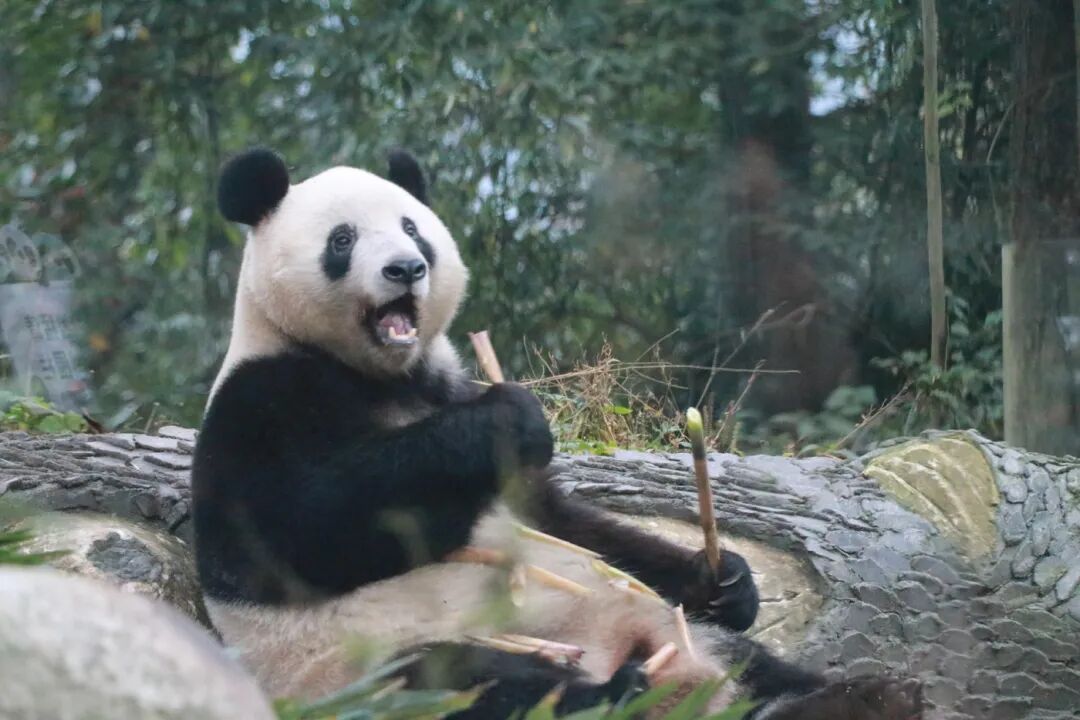
From Loving Pandas to Protecting Them
The popularity of giant pandas in Japan is closely connected with the country’s love of “kawaii,” or cuteness.
“Giant pandas have round heads, round ears and bright eyes,” explains Toshimitsu Doi, president of the Japan Panda Protection Association. “They look like human babies, so people naturally want to care for them.”
On October 28, 1972, to mark the normalization of diplomatic relations between China and Japan, China presented two giant pandas to Ueno Zoo in Tokyo.
That gift sparked a long-lasting panda craze across Japan.
Xiang Xiang was the first giant panda born at Ueno Zoo in nearly 30 years and the first giant panda successfully bred naturally at the zoo.
Besides Ueno Zoo, Japanese visitors could also see giant pandas at Adventure World in Shirahama, Wakayama Prefecture, and Oji Zoo in Kobe, Hyogo Prefecture.
Adventure World in Wakayama has successfully bred many giant pandas and built its own famous panda family, known as the “Hama Family.”
Since 1994, the Chengdu Research Base of Giant Panda Breeding and Adventure World in Shirahama have carried out international cooperation on giant panda breeding.
Together, they successfully bred 17 cubs in 12 litters, setting a record for international giant panda breeding cooperation and creating the largest overseas giant panda population.
One panda, Meimei, gave birth to five litters and nine cubs between 2000 and 2006. Seven of the cubs survived, setting several records in captive giant panda breeding.
So far, 11 giant pandas born in Japan—including Xiongbang, Longbang, Qiubang, Xingbang, Meibang and Yongbang—have returned to China.
Doi, a former director of Ueno Zoo, then turned to what he sees as an even more important meaning behind the Japan Panda Protection Association.
“Loving giant pandas cannot stop at simply thinking they are cute. There is much more professional and important conservation work that we need to pay attention to and support.”
“Panda care and management, breeding technology, disease prevention and treatment, as well as the protection of the wild habitats where pandas live—all of these are at the heart of our work,” Doi says.
A love that begins with “cuteness,” he believes, should ultimately grow into respect for life and nature—and a commitment to protecting them.
Giant panda Xiang Xiang and her fellow pandas have become an invisible bridge connecting people in China and Japan.
Through them, a shared love—and a shared responsibility—continues to bring people from the two countries closer, keeping the friendship between China and Japan alive through the years.