Pandas Return, Locals Rebuild Their Lives in Ya'an
October 12, 2026 marks the fifth anniversary of the establishment of Giant Panda National Park.
Five years on, what results has the Ya’an Area of Giant Panda National Park delivered?
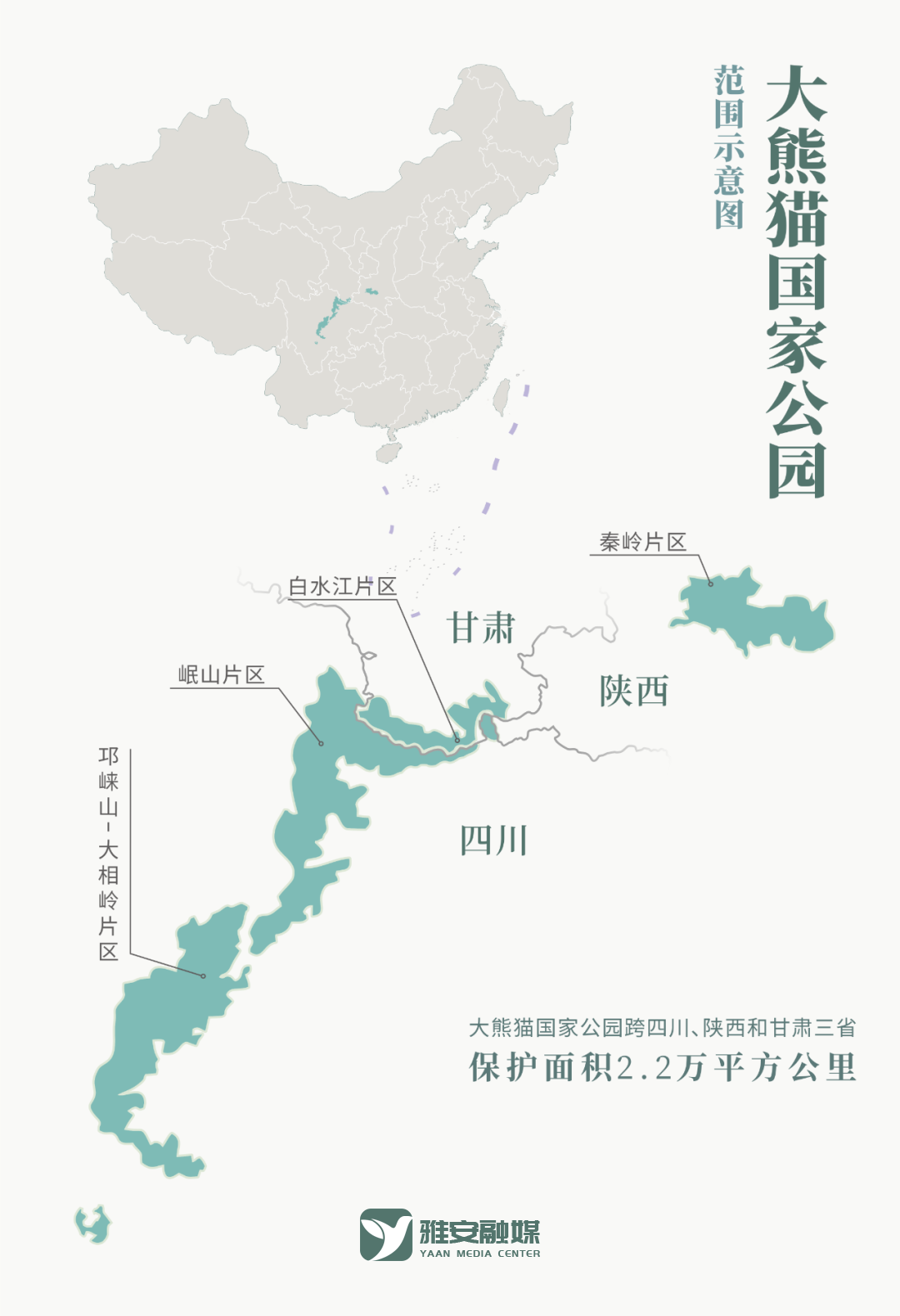
Graphic by Zheng Congwei
Ya’an is the site of the world’s first scientific discovery of the giant panda. A total of 5,935.82 square kilometers of land here has been incorporated into the national park, accounting for 27% of the total area of Giant Panda National Park across China. This area spans three major mountain ranges: the Qionglai Mountains, the Daxiangling Mountains and the Xiaoxiangling Mountains.
It holds six “firsts”: in terms of the incorporated land area, proportion within the municipal territory, number of mountain ranges, number of giant pandas presented as national gifts, wild release of captive-bred pandas, and full-chain conservation.
Yet these “firsts” are not mere honors.
Ya’an has clear missions: to connect three critical ecological corridors — the Tuwu Mountain, Niba Mountain and Erlang Mountain Corridors; to build three key gateway communities: Muping in Baoxing, Longcanggou in Yingjing and Laba River in Tianquan; and to develop two demonstration zones: the Qionglai Mountain Ecological Conservation and Education Model Zone, and the Daxiangling-Xiaoxiangling Population Restoration Demonstration Zone.
How much progress has Ya’an made on these tasks?
Origins
Why Ya’an?
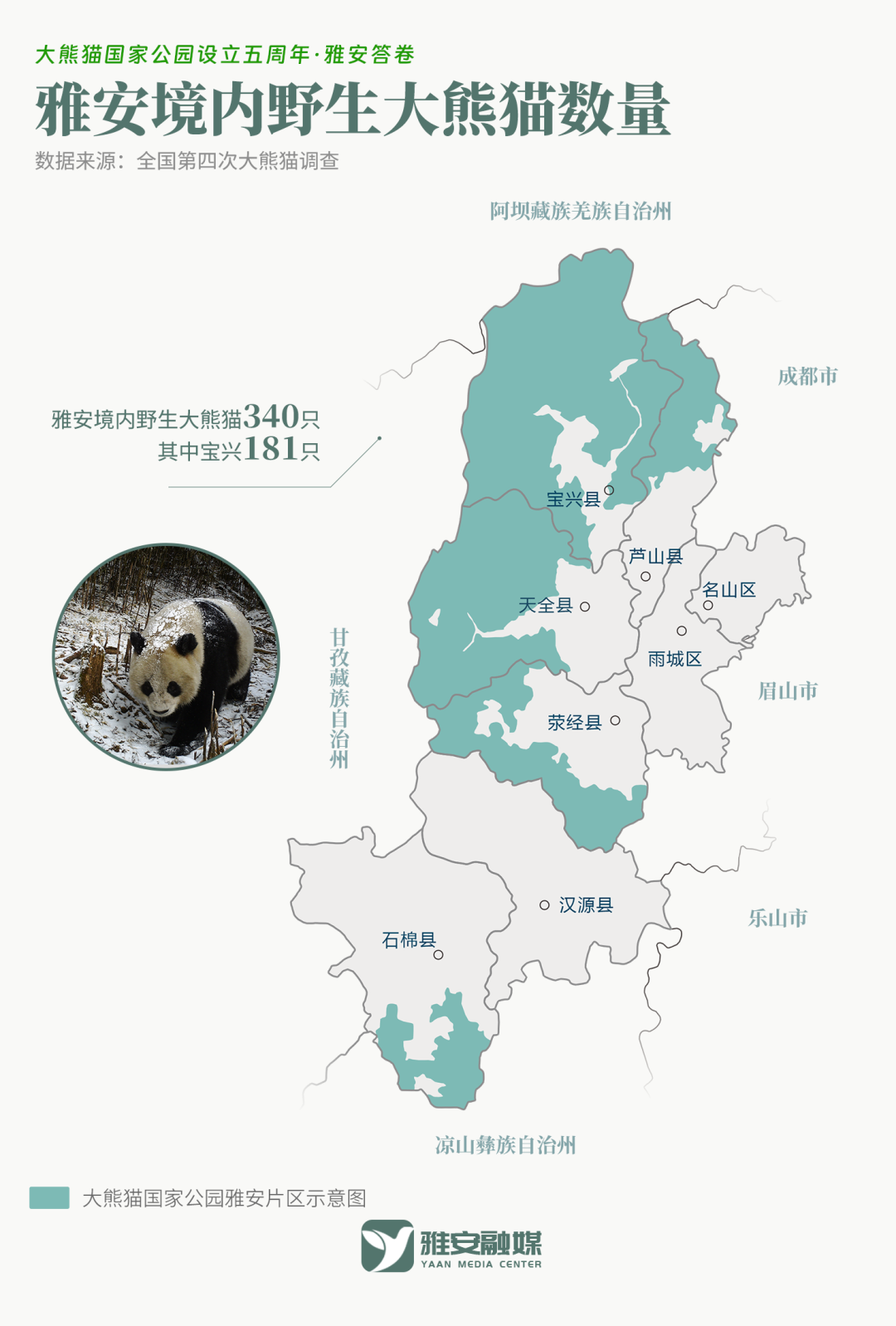
In 1869, Armand David, a French naturalist, scientifically discovered the giant panda in Dengchigou of Baoxing. This made Ya’an the location of the world’s first scientific discovery of the giant panda and the type specimen locality. According to the Fourth National Giant Panda Survey, 340 wild giant pandas lived within Ya’an, among which 181 were found in Baoxing, boasting the highest wild population density nationwide.
Giant Panda National Park stretches across five major mountain ranges. The Ya’an Area covers three of them — the Qionglai, Daxiangling and Xiaoxiangling Mountains. It is the only section linking all three mountain ranges. If panda habitats in Ya’an become fragmented, panda populations across these three mountain ranges will be trapped in isolated “habitat islands”.
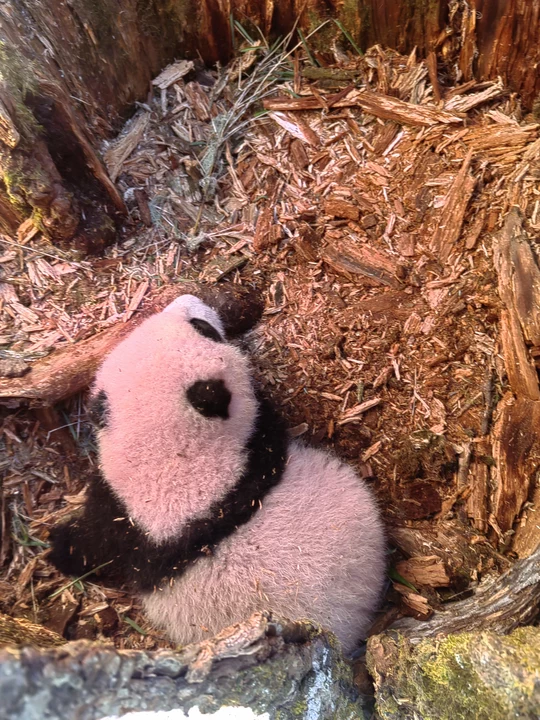
Wild giant panda captured by infrared camera in the Shimian Area
Ya’an is also the only place to witness the complete process of “scientific discovery — captive breeding and conservation — wild release”. The Bifengxia Breeding Base, together with the Liziping and Daxiangling Wild Release Bases, paired with continuous field research and monitoring, forms a full conservation chain: breeding → pre-release training → wild release → post-release monitoring.
Exploration
Three Corridors, Three Communities, Three Types of Carbon Sinks
Ya’an’s core tasks include the three parallel ecological corridors of Tuwu Mountain, Niba Mountain and Erlang Mountain. The Tuwu Mountain Corridor connects the two local populations in Gongyihai and Shihuiyao of the Xiaoxiangling Mountains. The Niba Mountain Corridor links the Daxiangling Mountains to the Qionglai Mountains. The Erlang Mountain Corridor facilitates connectivity among populations within the Qionglai Mountains. These three corridors stitch together habitats fragmented by highways, towns and human activities across the three mountain ranges.
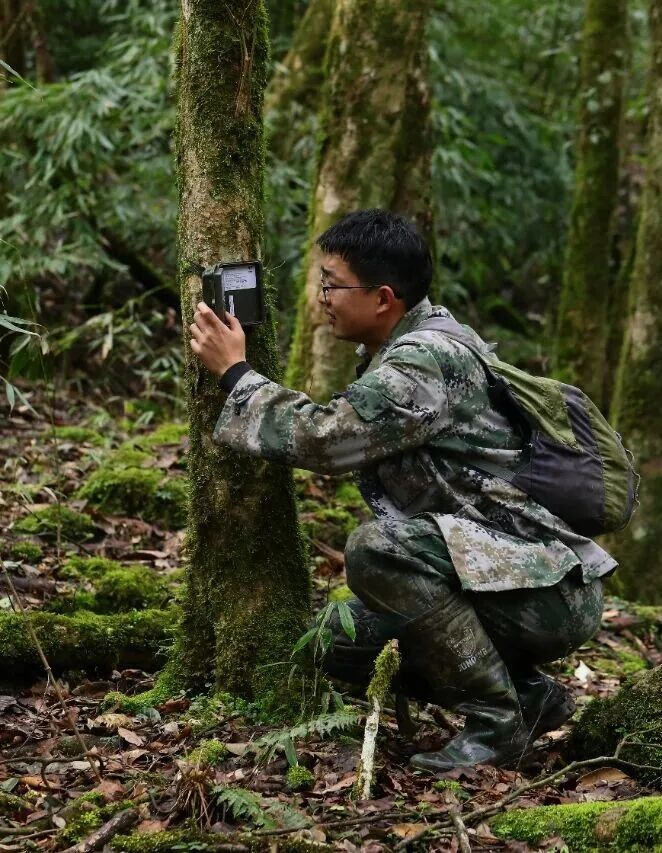
Field monitoring conducted by staff at the Yingjing General Management Station. Photo provided by interviewee.
The Niba Mountain Corridor once suffered ecological breakpoints due to vegetation degradation and human disturbance. Starting in 2018, researchers spent three to four years comparing multiple restoration solutions and developed tailored techniques including strip thinning, light transmission thinning and shrub clearance. More than 7,000 mu of habitat has been restored. For seven consecutive years, infrared cameras have captured footage of mother pandas with cubs. Six hundred infrared cameras cover the Daxiangling area. Species rarely recorded before, such as Sichuan snub-nosed monkeys, sambar deer and kalij pheasants, are spotted frequently. In 2025, definitive footage of the Sichuan buttonquail, a national Class-I protected bird species, was obtained.
On the Tuwu Mountain Corridor, the released giant panda Zhangxiang was recorded crossing into Yele in Mianning. Another released panda Zhangmeng travelled back and forth multiple times between the Gongyihai and Shihuiyao populations.
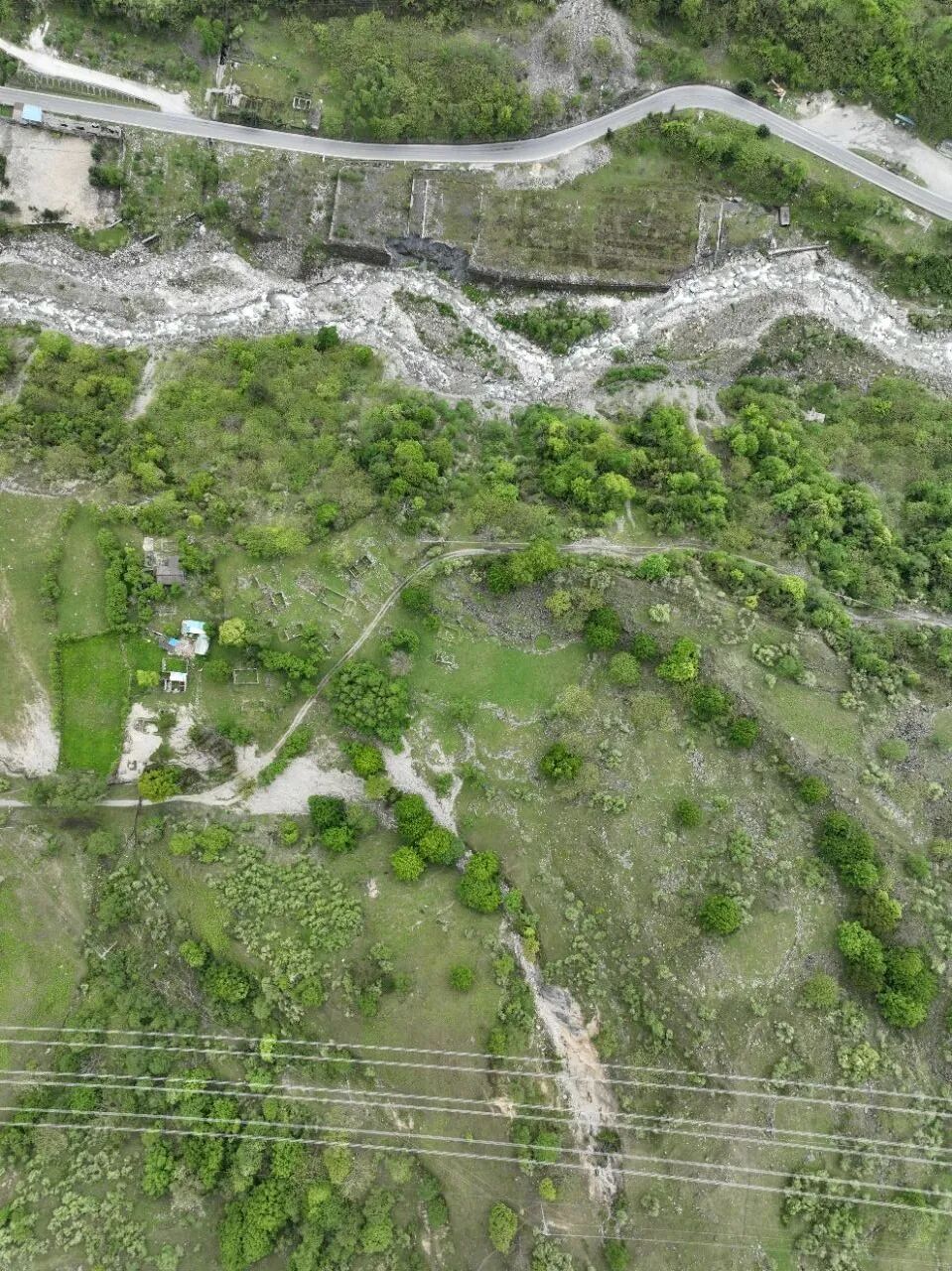 Corridor restoration. Photo from Shimian Area.
Building corridors is only part of the story. Habitat restoration is not merely an ecological issue — it also involves local residents.
Ya’an has designated three key gateway communities with distinct positioning:
Muping in Baoxing: Focuses on origin-tracing. Leveraging Dengchigou, the site of the giant panda’s scientific discovery, and the Origin Museum, it develops research and origin-tracing tourism.
Longcanggou in Yingjing: Focuses on wilderness exploration. Relying on the International Giant Panda Forest Exploration School and the Momo Homeland cultural tourism complex, it delivers nature education and forest experience programmes.
Laba River in Tianquan: Focuses on human-wildlife harmony. Drawing on the Laba River Scenic Area and the gateway community service centre, it explores models for coexistence between humans and wild animals.
The three communities adopt three different orientations to avoid homogeneous development.
Community transformation answers the question of “where residents can go”, yet people guarding the forests still need new sources of income.
2,545.53 square kilometres of Baoxing County is included in the national park, accounting for 81.7% of the county’s land area. Clear-cutting of commercial planted forests is banned, making carbon sinks a new revenue stream for forest farmers. Baoxing is the only county in Sichuan Province that has three carbon sink products at the same time: CCER afforestation carbon sinks, forest management carbon inclusive projects, and giant panda habitat conservation and restoration carbon inclusive projects. Thanks to its added biodiversity value, the giant panda habitat conservation and restoration carbon inclusive product sells at 150 yuan per tonne. The project covers 12,294.5 mu of forestland with an estimated output value of about 2.6 million yuan.
On August 20, Sichuan-Chongqing’s first cross-provincial judicial carbon credit was delivered. The defendant in an illegal logging case in Chongqing purchased 120 tonnes of carbon sinks for a transaction value of 18,000 yuan.
Carbon sink revenue is split 60/40 between Baoxing and a third-party operator. Of Baoxing’s 60% share, 90% is distributed to forest farmers.
Looking Ahead
After Human Relocation: What Livelihoods for Local Residents?
Corridors are connected, communities transformed, carbon sinks traded. Yet the fundamental question remains: after human withdrawal from core habitats, how do local people make a living?
In Panda New Village, Fengtongzhai Township, Baoxing County, 39 households (168 residents) were relocated down from high mountains. Today the village hosts 42 homestays. During the peak summer vacation season, it receives 500 to 600 tourists daily, with tourism revenue of approximately 4.5 million yuan. A pyramid-shaped industrial structure has taken shape here: high-end boutique homestays form the “peak”, standardised local homestays and farm inns the “body”, and individual farming households participating in operations the “base”.
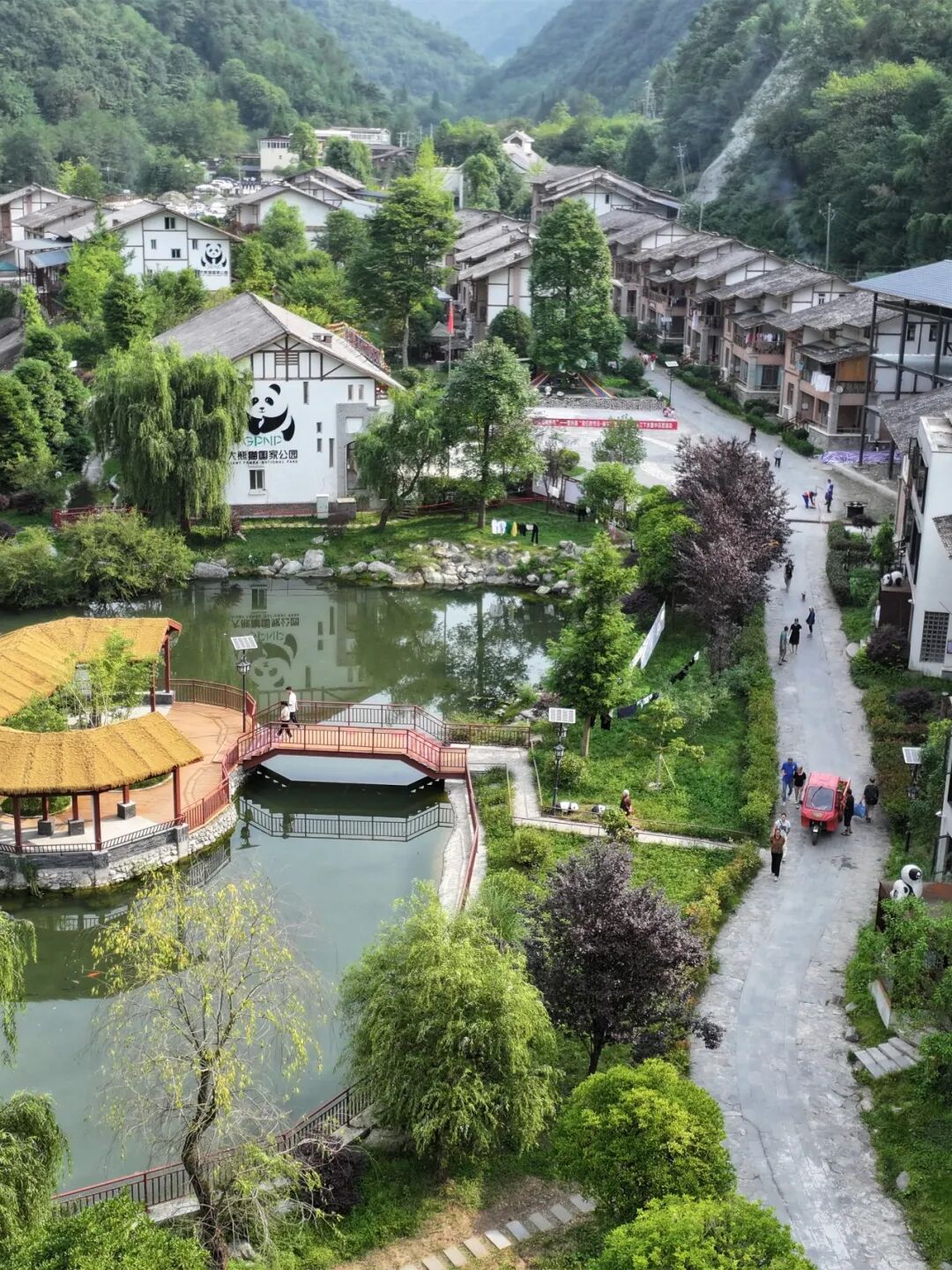
Homestay alliance established in Dengchigou Village. Photo by Jiang Xin.
In July 2026, Dengchigou Village set up a homestay alliance, integrating catering, accommodation, transportation and local agricultural product shopping into a one-stop service platform.
All loggers under the Jiajin Mountain State Forest Protection Bureau laid down their axes and chainsaws to become forest rangers. Eighteen management stations are set up to implement grid-based management over 2.476 million mu of forest and grassland.
In Fazhan Village, Longcanggou Township, Yingjing County, villager Hu Tailun switched from logging and bamboo shoot harvesting to running a homestay. He also voluntarily studied ornithology and became one of the first “ecological guides”. The birdwatching season runs from October to April of the following year, filling the off-season gap of summer escape tourism. Longcanggou Township now has 68 farm inns and 81 catering businesses. Birdwatching routes alone are expected to attract an additional 12,000 tourists annually.
The Laba River Gateway Community Comprehensive Service Centre in Tianquan County has entered trial operation. The Liziping Area in Shimian County continues to carry out community livelihood training. Wildlife damage compensation insurance has achieved full coverage across Lushan County. Each county adopts tailored approaches with different paths, yet shares the same goal.
From logging trees, harvesting bamboo shoots and gathering medicinal herbs to running homestays, working as bird guides and patrolling forests — mountain residents in Ya’an have embraced a new way of life.